As How Artificial Intelligence Is Transforming Health Information Technology takes center stage, this opening passage beckons readers with casual formal language style into a world crafted with good knowledge, ensuring a reading experience that is both absorbing and distinctly original.
Artificial Intelligence (AI) is making waves in the realm of Health Information Technology, revolutionizing the healthcare industry in ways never seen before. From enhancing medical imaging analysis to personalized medicine initiatives, AI is reshaping how health information is managed and utilized.
Let's delve into the transformative power of AI in health information technology.
Overview of AI in Health Information Technology
Artificial Intelligence (AI) is playing a significant role in transforming the healthcare industry by revolutionizing the way health information is managed and utilized. AI applications in health information technology are providing innovative solutions to improve patient care, enhance diagnostics, and streamline administrative processes in healthcare settings.
AI Applications in Health Information Technology
- AI-powered Electronic Health Records (EHR): AI algorithms can analyze and interpret large volumes of patient data stored in EHR systems to identify patterns, predict outcomes, and provide personalized treatment recommendations.
- Medical Imaging Analysis: AI algorithms can analyze medical images such as X-rays, MRIs, and CT scans to assist radiologists in detecting abnormalities, tumors, and other medical conditions with higher accuracy and speed.
- Natural Language Processing (NLP): NLP technology enables machines to understand and interpret human language, allowing healthcare providers to extract valuable insights from unstructured data such as clinical notes, research papers, and patient records.
Benefits of Using AI in Managing Health Information
- Improved Diagnosis and Treatment: AI can help healthcare professionals make more accurate and timely diagnoses, leading to better treatment outcomes for patients.
- Enhanced Patient Care: AI-powered tools can provide personalized care plans, medication recommendations, and health monitoring, improving patient engagement and overall health outcomes.
- Efficient Administrative Processes: AI can automate administrative tasks such as scheduling appointments, billing, and coding, reducing paperwork and allowing healthcare providers to focus more on patient care.
AI-Powered Electronic Health Records (EHR)
AI technology is revolutionizing the way Electronic Health Records (EHRs) are created and maintained in healthcare settings. By leveraging AI capabilities, EHR systems are becoming more efficient, accurate, and user-friendly.
Transformation of EHR Creation and Maintenance
AI has automated various aspects of EHR creation and maintenance processes. Tasks like data entry, documentation, and coding can now be handled by AI algorithms, reducing the burden on healthcare professionals and minimizing the risk of errors. AI-powered EHR systems can also analyze large volumes of data quickly, providing valuable insights to assist in clinical decision-making.
Comparison with Traditional EHR Systems
Traditional EHR systems rely heavily on manual input and are often time-consuming for healthcare providers. In contrast, AI-powered EHR systems can automatically capture and update patient information in real-time, ensuring that records are always up-to-date. Additionally, AI can help in organizing and structuring data in a more meaningful way, making it easier to retrieve and analyze when needed.
Impact on Efficiency and Accuracy of EHRs
The integration of AI into EHR systems has significantly improved efficiency and accuracy in healthcare settings. AI algorithms can identify patterns in patient data, predict potential health issues, and even suggest personalized treatment plans. This not only saves time for healthcare providers but also enhances the quality of patient care by reducing diagnostic errors and improving treatment outcomes.
AI for Medical Imaging Analysis
AI has revolutionized medical imaging analysis by significantly enhancing diagnostic accuracy and efficiency. Through advanced algorithms and machine learning techniques, AI is able to interpret medical images with incredible precision, leading to improved patient outcomes and treatment decisions.
Role of AI in Improving Diagnostic Accuracy
AI plays a crucial role in improving diagnostic accuracy through image recognition. By analyzing vast amounts of medical imaging data, AI systems can detect patterns and anomalies that may not be easily identified by human radiologists. This leads to earlier detection of diseases, more accurate diagnoses, and personalized treatment plans for patients.
Examples of AI Technologies Used in Interpreting Medical Images
- Deep learning algorithms: Deep learning models, such as convolutional neural networks (CNNs), are widely used in medical imaging analysis. These algorithms can automatically identify and classify features in medical images, helping radiologists interpret complex scans more efficiently.
- Computer-aided detection (CAD) systems: CAD systems use AI to highlight suspicious areas in medical images, assisting radiologists in detecting abnormalities like tumors or lesions. By acting as a second pair of eyes, CAD systems improve diagnostic accuracy and reduce the chances of human error.
- Image segmentation tools: AI-powered image segmentation tools can partition medical images into different regions of interest, making it easier for radiologists to analyze specific areas of concern. This technology helps in precise measurements, tumor delineation, and treatment planning.
AI-Enabled Predictive Analytics in Healthcare
Predictive analytics powered by AI plays a crucial role in revolutionizing the healthcare industry by leveraging advanced algorithms to forecast patient outcomes and trends. This technology has the potential to significantly enhance patient care and treatment strategies.
The Significance of AI-Enabled Predictive Analytics
Predictive analytics powered by AI allows healthcare providers to anticipate potential health issues, identify high-risk patients, and optimize treatment plans. By analyzing vast amounts of data, AI algorithms can predict the likelihood of certain outcomes, such as hospital readmissions, disease progression, or medication adherence.
- AI algorithms help in predicting patient outcomes and trends by analyzing historical data, identifying patterns, and making accurate forecasts based on this information.
- These predictions enable healthcare professionals to intervene proactively, personalize treatment plans, and allocate resources efficiently, ultimately improving patient outcomes and reducing healthcare costs.
The Potential of AI-Driven Predictive Analytics in Improving Patient Care
AI-driven predictive analytics has the potential to transform patient care by enabling early detection of diseases, predicting complications, and optimizing preventive measures. By utilizing real-time data and continuous monitoring, healthcare providers can offer personalized care plans tailored to each patient's unique needs.
By harnessing the power of AI-enabled predictive analytics, healthcare organizations can enhance patient outcomes, streamline operations, and ultimately save lives.
AI in Personalized Medicine
AI in personalized medicine focuses on tailoring treatment plans for individual patients based on their unique characteristics and needs. By utilizing AI algorithms to analyze vast amounts of patient data, healthcare providers can recommend personalized treatments that are more effective and targeted towards specific health conditions.
AI Applications for Personalized Medicine
- AI-powered decision support systems can analyze genetic information, medical history, and lifestyle factors to suggest personalized treatment plans for patients.
- Machine learning algorithms can predict how patients will respond to certain medications or therapies, helping healthcare providers choose the most effective treatment options.
- AI tools can identify patterns in patient data to create personalized risk profiles for diseases, allowing for early intervention and prevention strategies.
Epilogue
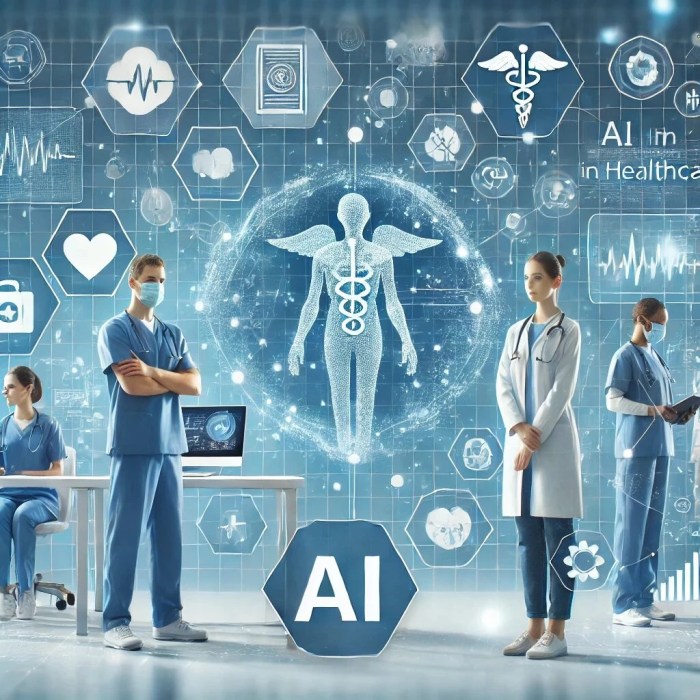
In conclusion, the advancements in AI are propelling Health Information Technology into a new era of efficiency, accuracy, and personalized care. The future of healthcare looks promising with the integration of AI technologies. As we continue to witness the transformative impact of AI, it's clear that the synergy between artificial intelligence and health information technology is a game-changer in the medical field.
FAQ Guide
How does AI improve diagnostic accuracy in medical imaging analysis?
AI algorithms analyze medical images with precision, aiding in faster and more accurate diagnosis of conditions.
What are the benefits of using AI in managing health information?
AI streamlines processes, reduces errors, improves data insights, and enhances patient care coordination.
How does AI enable predictive analytics in healthcare?
AI algorithms predict patient outcomes and trends based on data analysis, helping healthcare providers make informed decisions.
What role does AI play in tailoring treatment plans for individual patients?
AI analyzes patient data to recommend personalized treatments, ensuring more targeted and effective care.


![20 Best Online Computer Information Systems Degrees [2025 CIS Degree Guide]](https://technology.fin.co.id/wp-content/uploads/2025/10/colleges-best_1910-120x86.png)

![Is Computer Information Systems a Good Major? [2025 Guide]](https://technology.fin.co.id/wp-content/uploads/2025/10/computer-information-systems-careers-2-120x86.jpg)