Delving into How to Become a Chief Technology Officer: Step-by-Step Guide, this introduction immerses readers in a unique and compelling narrative, with a casual formal language style that is both engaging and thought-provoking from the very first sentence.
Exploring the path to becoming a Chief Technology Officer involves understanding the role, developing technical skills, gaining leadership experience, building a professional network, and obtaining higher education. Let's delve into each step to unlock the secrets of reaching the pinnacle of the technology industry.
Research and Understand the Role
Becoming a Chief Technology Officer (CTO) is a prestigious position that requires a deep understanding of technology, leadership, and business acumen. Let's delve into the responsibilities, skills, qualifications, and career path to becoming a successful CTO.
Responsibilities of a Chief Technology Officer
- Developing and implementing the company's technology strategy to support overall business goals
- Leading the technology team in designing, developing, and implementing innovative solutions
- Overseeing the IT infrastructure, cybersecurity, and data management of the organization
- Collaborating with other executives to align technology initiatives with business objectives
- Staying abreast of technological trends and advancements to drive innovation within the company
Key Skills and Qualifications Required
- Strong leadership and communication skills to effectively manage teams and collaborate with stakeholders
- In-depth knowledge of technology trends, tools, and platforms relevant to the industry
- Strategic thinking and problem-solving abilities to address complex technical challenges
- A bachelor's degree in Computer Science, Information Technology, or a related field; a master's degree or MBA can be advantageous
- Proven experience in progressively responsible technology roles, with a track record of successful project implementations
Typical Career Path to Becoming a CTO
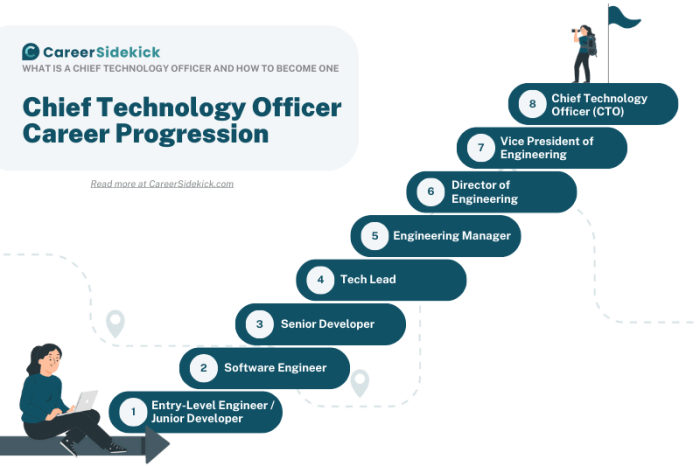
- Start by gaining experience in technical roles such as software development, IT management, or system architecture
- Advance to leadership positions within the technology department, such as IT Director or VP of Engineering
- Acquire additional skills through professional development courses, certifications, and networking opportunities
- Demonstrate leadership, strategic vision, and a deep understanding of the business to be considered for the CTO role
- Continuously update your knowledge and skills to stay relevant in the rapidly evolving technology landscape
Develop Technical Skills
Developing technical skills is crucial for aspiring Chief Technology Officers (CTOs) to effectively lead their teams and drive innovation within their organizations. Here are some essential technical skills required for a CTO, the importance of staying updated with the latest technology trends, and resources to enhance technical knowledge.
Essential Technical Skills
- Proficiency in programming languages such as Python, Java, or C++ to understand and contribute to the development process.
- Deep understanding of cloud computing platforms like AWS, Azure, or Google Cloud to leverage the benefits of cloud technologies.
- Knowledge of cybersecurity principles and best practices to ensure the security of data and systems.
- Experience with data analytics and machine learning to make data-driven decisions and implement AI solutions.
Importance of Staying Updated
Staying updated with the latest technology trends is essential for CTOs to remain competitive and drive innovation within their organizations. By keeping abreast of emerging technologies, CTOs can anticipate industry changes, identify new opportunities, and make informed decisions to stay ahead of the curve.
Resources to Enhance Technical Knowledge
- Online courses and certifications from platforms like Coursera, edX, or Udemy to deepen technical expertise in specific areas.
- Attending tech conferences, workshops, and webinars to network with industry experts and stay informed about the latest trends.
- Joining professional associations like IEEE or ACM to access resources, publications, and networking opportunities within the tech community.
- Engaging in hands-on projects, hackathons, or open-source contributions to apply and refine technical skills in real-world scenarios.
Gain Leadership Experience
Leadership skills are crucial for a Chief Technology Officer (CTO) as they are responsible for leading and managing the technology team, setting the overall technical direction, and making key decisions that impact the organization's technology strategy. Effective leadership ensures the successful implementation of technology initiatives, alignment with business goals, and fostering innovation within the team.
Qualities of a Successful CTO
- Strategic Vision: A successful CTO must have a clear vision for the future of technology within the organization and be able to align technical strategies with overall business objectives.
- Effective Communication: Strong communication skills are essential for a CTO to convey complex technical information to non-technical stakeholders, inspire the team, and build strong relationships both internally and externally.
- Team Building: The ability to build a strong and motivated technology team is crucial for a CTO to drive innovation, collaboration, and productivity within the organization.
- Decision-Making: CTOs must be able to make timely and informed decisions, considering technical feasibility, business impact, and potential risks to ensure the success of technology initiatives.
- Adaptability: In the fast-paced world of technology, a successful CTO must be adaptable to change, embrace new technologies, and lead the team through evolving challenges and opportunities.
Improving Leadership Abilities
- Seek Mentorship: Finding a mentor who is an experienced leader in the technology industry can provide valuable guidance and insights to help improve leadership skills.
- Take on Leadership Roles: Volunteer for leadership opportunities within the organization or industry, such as leading a project team or mentoring junior team members, to gain hands-on experience and develop leadership capabilities.
- Continuous Learning: Stay updated on the latest trends and best practices in technology leadership through courses, workshops, seminars, and networking events to enhance leadership abilities.
- Solicit Feedback: Actively seek feedback from peers, team members, and supervisors to identify areas for improvement and make necessary adjustments to strengthen leadership skills.
- Lead by Example: Demonstrate integrity, accountability, and a strong work ethic to inspire trust and confidence in the team, leading by example in all aspects of leadership.
Build a Strong Professional Network
Networking in the tech industry is crucial for career growth and opportunities
Importance of Networking in the Tech Industry
- Networking helps in staying updated with the latest industry trends and developments.
- It provides opportunities to learn from experienced professionals and experts in the field.
- Networking can lead to potential job offers, partnerships, or business opportunities.
- Building a strong network can enhance your reputation and credibility in the industry.
Tips on Establishing and Expanding a Professional Network
- Attend industry conferences, seminars, and workshops to meet like-minded professionals.
- Join online tech communities and forums to connect with professionals from around the world.
- Utilize social media platforms like LinkedIn to showcase your skills and connect with industry leaders.
- Offer to mentor or volunteer in tech-related events to expand your network and give back to the community.
- Don't hesitate to reach out and initiate conversations with professionals you admire or want to learn from.
Platforms and Events for Networking
- LinkedIn: A professional networking platform to connect with industry professionals and potential employers.
- Tech Meetups: Join local tech meetups or events to network with professionals in your area.
- Industry Conferences: Attend tech conferences and summits to meet experts and build connections in the industry.
- Online Webinars: Participate in virtual webinars and workshops to network with professionals from different locations.
Obtain Higher Education
Continuing your education through advanced degrees in technology or business can significantly benefit your journey to becoming a Chief Technology Officer. These degrees can provide you with specialized knowledge, leadership skills, and a broader understanding of the industry, helping you stand out in a competitive job market.
Benefits of Pursuing Advanced Degrees
- Advanced degrees can enhance your technical expertise and problem-solving skills, making you more proficient in handling complex technological challenges.
- Higher education can also help you develop strategic thinking and decision-making abilities, crucial for leadership roles like a Chief Technology Officer.
- Having an advanced degree can increase your credibility and open up opportunities for career advancement and higher salary potential.
Relevant Courses and Certifications
- Consider pursuing courses or certifications in areas such as data science, cybersecurity, artificial intelligence, or business management to complement your technical skills with business acumen.
- Certifications from reputable organizations like PMI (Project Management Institute) or IEEE (Institute of Electrical and Electronics Engineers) can also add value to your resume and demonstrate your commitment to continuous learning.
Balancing Education with Work Responsibilities
- Opt for part-time or online programs that offer flexibility in scheduling to balance your education with work obligations.
- Create a study plan and set realistic goals to manage your time effectively and ensure you stay on track with your coursework.
- Communicate with your employer about your educational pursuits and explore opportunities for employer-sponsored programs or flexible work arrangements to support your academic endeavors.
Final Thoughts
In conclusion, the journey to becoming a Chief Technology Officer is multifaceted and requires a blend of technical expertise, leadership skills, networking abilities, and continuous learning. By following this step-by-step guide, aspiring individuals can pave their way towards a successful career in technology leadership.
Popular Questions
What are the typical responsibilities of a Chief Technology Officer?
A Chief Technology Officer is responsible for overseeing an organization's technological needs, developing strategies to enhance technology infrastructure, and ensuring that technology solutions align with business goals.
What are some essential technical skills required for a CTO?
Essential technical skills for a CTO include proficiency in software development, cybersecurity, cloud computing, data analytics, and emerging technologies like artificial intelligence and blockchain.
Why is leadership experience important for a CTO role?
Leadership experience is crucial for a CTO as they need to inspire and guide tech teams, make strategic decisions, and drive innovation within the organization. Strong leadership skills are essential for success in this position.
How can networking help in advancing towards a CTO position?
Networking can help aspiring CTOs connect with industry professionals, learn about new opportunities, and gain valuable insights. By building a strong professional network, individuals can enhance their chances of reaching the CTO role.
What are the benefits of pursuing advanced degrees for aspiring CTOs?
Pursuing advanced degrees in technology or business can provide aspiring CTOs with in-depth knowledge, credibility, and a competitive edge in the job market. Advanced education can open up new career opportunities and enhance professional growth.


![20 Best Online Computer Information Systems Degrees [2025 CIS Degree Guide]](https://technology.fin.co.id/wp-content/uploads/2025/10/colleges-best_1910-120x86.png)
![Is Computer Information Systems a Good Major? [2025 Guide]](https://technology.fin.co.id/wp-content/uploads/2025/10/computer-information-systems-careers-2-120x86.jpg)