As How Health Information Technology Helps Prevent Medical Errors takes center stage, this opening passage beckons readers into a world crafted with good knowledge, ensuring a reading experience that is both absorbing and distinctly original.
Health Information Technology plays a crucial role in enhancing patient safety and reducing medical errors. Let's delve into the ways it revolutionizes healthcare practices.
Importance of Health Information Technology in Preventing Medical Errors
Health Information Technology (HIT) plays a crucial role in enhancing patient safety by reducing the occurrence of medical errors. Through the use of electronic health records (EHRs) and decision support systems, healthcare providers can significantly minimize the risks associated with patient care.
Improving Patient Safety with HIT
- Electronic Health Records (EHRs) allow healthcare professionals to access comprehensive and up-to-date information about a patient's medical history, medications, allergies, and lab results. This accessibility ensures that accurate information is readily available, reducing the likelihood of errors due to missing or outdated data.
- Decision Support Systems (DSS) provide healthcare providers with real-time alerts and reminders regarding potential drug interactions, dosing errors, or other critical information relevant to a patient's care. These alerts help clinicians make informed decisions, ultimately preventing medical mistakes.
Examples of EHRs Reducing Medication Errors
- With EHRs, healthcare providers can electronically prescribe medications, reducing the risk of illegible handwriting and transcription errors commonly associated with paper prescriptions. This clarity in prescription orders minimizes the chances of dispensing the wrong medication or dosage to patients.
- EHRs also enable healthcare teams to track a patient's medication history, ensuring that duplicate prescriptions or potentially harmful drug combinations are avoided. This comprehensive view of a patient's medication regimen helps prevent adverse drug events and enhances medication safety.
Role of Decision Support Systems in Preventing Medical Mistakes
- Decision Support Systems analyze patient data in real-time to provide clinicians with evidence-based recommendations and alerts. By integrating clinical guidelines and best practices into the system, DSS help healthcare providers adhere to standardized protocols and guidelines, reducing variability in care and minimizing errors.
- Through DSS, healthcare providers receive alerts for potential drug allergies, drug-drug interactions, and dosing errors, prompting them to reconsider their treatment decisions. This real-time support enhances clinical decision-making and aids in preventing adverse events that could harm patients.
Benefits of Health Information Technology in Error Prevention
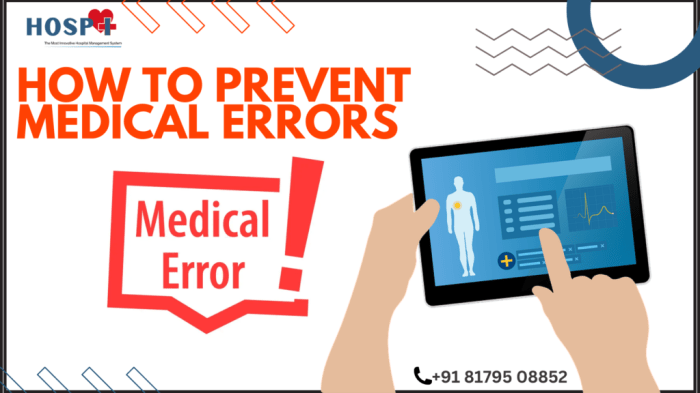
Real-time access to patient data is a crucial aspect of health information technology that aids in preventing medical errors. By having immediate access to a patient's medical history, current medications, and test results, healthcare providers can make informed decisions promptly, leading to timely interventions that can prevent potential errors in diagnosis or treatment.
Electronic Prescribing Systems
Electronic prescribing systems play a significant role in minimizing prescription errors in healthcare settings. These systems help eliminate issues related to illegible handwriting, dosage errors, drug interactions, and allergies by providing healthcare providers with a digital platform to electronically send prescriptions to pharmacies.
This process enhances accuracy, efficiency, and safety in medication management, reducing the likelihood of errors that could harm patients.
Interoperability Between Systems
Interoperability between different health information systems enables seamless sharing of patient data across various healthcare settings, such as hospitals, clinics, pharmacies, and laboratories. This connectivity enhances coordination of care by allowing healthcare providers to access comprehensive and up-to-date patient information, including diagnoses, treatment plans, and test results.
As a result, the risk of errors due to incomplete or outdated information is minimized, leading to better-informed decision-making and improved patient outcomes.
Enhancing Communication and Coordination through Health Information Technology

Effective communication and seamless coordination among healthcare providers are crucial for preventing medical errors and ensuring patient safety. Health information technology plays a significant role in facilitating these essential aspects of healthcare delivery.
Improving Communication with Electronic Health Records (EHRs)
Electronic Health Records (EHRs) enable healthcare providers to access and share patient information in real-time, regardless of their physical location. This instant access to comprehensive patient data enhances communication between different healthcare teams involved in a patient's care. For example, when a patient is transferred from one department to another within a hospital, all providers can quickly review the patient's medical history, test results, and treatment plans through the EHR system, ensuring continuity of care and reducing the risk of errors due to miscommunication.
Telemedicine Platforms for Remote Consultations
Telemedicine platforms allow healthcare providers to conduct remote consultations with patients, specialists, or colleagues, regardless of geographical barriers. These virtual consultations help prevent medical errors by enabling timely communication and collaboration among healthcare professionals. For instance, a primary care physician can consult with a specialist in real-time through a telemedicine platform to obtain expert advice on a complex case, leading to more accurate diagnoses and treatment decisions.
Impact of Health Information Exchange on Care Coordination
Health Information Exchange (HIE) platforms facilitate the secure sharing of patient information among different healthcare organizations, such as hospitals, clinics, and pharmacies. This interoperability improves care coordination by ensuring that all providers involved in a patient's care have access to the most up-to-date and accurate medical information.
As a result, redundant tests, medication errors, and other potential pitfalls stemming from fragmented healthcare data are minimized, leading to better patient outcomes and reduced medical errors.
Implementing Patient Safety Measures with Health Information Technology
Implementing patient safety measures with health information technology plays a crucial role in reducing medical errors and improving overall healthcare outcomes. Through various technological tools and systems, healthcare providers can enhance medication safety, prevent missed diagnoses, and identify patterns to prevent errors in the future.
Barcode Medication Administration Systems Enhancing Medication Safety
Barcode medication administration systems involve scanning a patient's wristband and the medication to ensure the right patient receives the right medication at the right dosage and time. This process helps to reduce medication errors, such as administering the wrong medication or dosage, ultimately improving patient safety and outcomes.
Alerts and Reminders in Electronic Systems Preventing Missed Diagnoses
Electronic health record systems can generate alerts and reminders for healthcare providers regarding potential missed diagnoses based on a patient's symptoms, medical history, and test results. These alerts prompt healthcare providers to consider all relevant information and follow up on potential diagnoses, reducing the likelihood of overlooking critical conditions.
Data Analytics Tools Identifying Patterns to Prevent Errors
Data analytics tools analyze large sets of healthcare data to identify patterns, trends, and anomalies that could lead to medical errors. By leveraging these tools, healthcare organizations can proactively address areas of concern, implement preventive measures, and improve overall patient safety by avoiding potential errors in the future.
Concluding Remarks
In conclusion, the integration of Health Information Technology not only improves patient outcomes but also minimizes errors in the healthcare system. Embracing these advancements is key to a safer and more efficient medical environment.
Questions Often Asked
How can electronic health records reduce medication errors?
Electronic health records help by providing a centralized platform for healthcare providers to access patient information, reducing the chances of medication errors due to incomplete or inaccurate data.
What is the role of decision support systems in preventing medical mistakes?
Decision support systems assist healthcare professionals in making informed decisions by providing real-time data, alerts, and reminders, thus reducing the risk of medical errors.
How do electronic prescribing systems minimize prescription errors?
Electronic prescribing systems streamline the prescription process, reducing errors related to illegible handwriting, incorrect dosages, or drug interactions by automating the prescription process.
How can data analytics tools prevent errors in the future?
Data analytics tools analyze trends and patterns in healthcare data to identify potential errors before they occur, allowing for proactive measures to be taken to prevent such incidents.

![20 Best Online Computer Information Systems Degrees [2025 CIS Degree Guide]](https://technology.fin.co.id/wp-content/uploads/2025/10/colleges-best_1910-120x86.png)
![Is Computer Information Systems a Good Major? [2025 Guide]](https://technology.fin.co.id/wp-content/uploads/2025/10/computer-information-systems-careers-2-120x86.jpg)