
Computer Information Systems vs Computer Science: What’s the Difference? sets the stage for this enthralling narrative, offering readers a glimpse into a story that is rich in detail and brimming with originality from the outset.
As we delve deeper into the comparison between Computer Information Systems and Computer Science, we uncover a world of distinct disciplines that play a crucial role in shaping the technological landscape of today.
Understand the Basics
Computer Information Systems (CIS) and Computer Science are two distinct fields within the broader realm of computing. While both involve technology and data, they focus on different aspects of computing.
Computer Information Systems
Computer Information Systems, often referred to as CIS, is a field that focuses on the practical application of technology in business settings. It involves the use of technology to solve business problems, improve processes, and support decision-making.
- CIS professionals are responsible for designing, implementing, and managing information systems within organizations.
- They work with databases, networks, software applications, and other technology tools to support business operations.
- Key concepts in CIS include systems analysis, database management, project management, and information security.
Computer Science
Computer Science, on the other hand, is a more theoretical and technical field that focuses on the study of algorithms, programming languages, and the theoretical foundations of computing.
- Computer Science professionals are involved in software development, artificial intelligence, machine learning, and other advanced computing concepts.
- They design algorithms, develop software applications, and conduct research to advance the field of computing.
- Key concepts in Computer Science include data structures, algorithms, programming languages, and computer architecture.
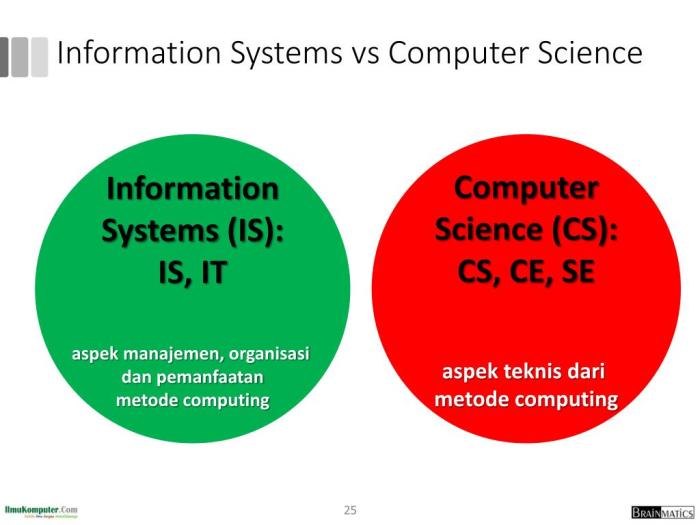
While CIS is more focused on the practical application of technology in business settings, Computer Science delves into the theoretical foundations and technical aspects of computing.
Curriculum and Coursework
When it comes to the curriculum and coursework of Computer Information Systems (CIS) and Computer Science programs, there are some key differences in the courses offered and areas of specialization.
Computer Information Systems Program
- Introduction to Information Systems
- Database Management
- Systems Analysis and Design
- Programming Fundamentals
- Networking Essentials
- Information Security
Computer Science Program
- Introduction to Computer Science
- Data Structures and Algorithms
- Operating Systems
- Software Engineering
- Computer Architecture
- Artificial Intelligence
Comparison and Contrast
While both CIS and Computer Science programs involve studying technology and computing, the focus areas differ. Computer Information Systems programs typically emphasize the practical application of technology in business settings, with coursework covering topics like database management, systems analysis, and networking.
On the other hand, Computer Science programs delve deeper into the theoretical aspects of computing, with courses on algorithms, operating systems, and artificial intelligence.
Computer Science programs often require more advanced math and theory courses compared to CIS programs. Students in Computer Science programs may also have the opportunity to specialize in areas like cybersecurity, machine learning, or software development, whereas CIS programs may offer concentrations in areas like IT management or business analytics.
Career Paths and Opportunities
When it comes to career paths and opportunities, both Computer Information Systems (CIS) and Computer Science offer a wide range of options for graduates to explore. Let's delve into the specific job roles, industries, and salary ranges associated with each discipline.
Career Options for Computer Information Systems Graduates
Computer Information Systems graduates are well-equipped to pursue careers in areas such as IT consulting, systems analysis, database administration, and cybersecurity. They play a crucial role in helping organizations effectively manage and utilize technology to meet their business needs. With a strong foundation in both business and technology, CIS professionals can bridge the gap between technical teams and business stakeholders.
- IT Consultant
- Systems Analyst
- Database Administrator
- Cybersecurity Analyst
Job Prospects and Industries for Computer Science Professionals
Computer Science professionals have a diverse range of job prospects across various industries, including software development, artificial intelligence, data science, and gaming. They are involved in designing, developing, and implementing software solutions, algorithms, and systems to solve complex problems. With a strong background in programming and computer theory, Computer Science graduates are in high demand in today's tech-driven world.
- Software Developer
- Data Scientist
- Artificial Intelligence Specialist
- Game Developer
Differences in Job Roles and Potential Salary Ranges
While both Computer Information Systems and Computer Science professionals work with technology, their job roles and responsibilities differ significantly. CIS professionals focus more on the practical application of technology to solve business problems and improve operational efficiency. On the other hand, Computer Science professionals are more involved in the theoretical aspects of computing, such as algorithm development, software design, and system architecture.In terms of salary ranges, Computer Science professionals typically command higher salaries due to the specialized technical skills and expertise required for roles such as software engineering, machine learning, and cybersecurity.
On the other hand, CIS professionals may have a broader range of job opportunities but may not always earn as much as their Computer Science counterparts.
Skills and Competencies

In the fields of Computer Information Systems and Computer Science, professionals require a specific set of skills and competencies to succeed. Let's explore the key differences in the skill sets of graduates in these disciplines.
Key Skills of Computer Information Systems Graduates
- Strong analytical skills to assess and solve complex business problems using technology.
- Excellent communication skills to interact with both technical and non-technical stakeholders.
- Knowledge of database management systems and data analysis for effective decision-making.
- Project management skills to oversee the implementation of technology solutions within organizations.
- Understanding of cybersecurity principles to protect sensitive data and systems.
Technical Competencies for a Career in Computer Science
- Proficiency in programming languages such as Java, Python, C++, and more.
- Knowledge of algorithms and data structures to develop efficient software solutions.
- Expertise in software development methodologies and practices for designing robust applications.
- Understanding of computer architecture and systems to optimize performance.
- Ability to work with emerging technologies like artificial intelligence, machine learning, and cybersecurity.
Differences and Complementarity in Skill Sets
Computer Information Systems professionals focus on the intersection of technology and business, requiring a blend of technical and soft skills. In contrast, Computer Science professionals delve deeper into the technical aspects of software development and computer systems.While Computer Information Systems graduates excel in bridging the gap between technology and business needs, Computer Science professionals possess the technical expertise to develop innovative solutions.
The skill sets of these professionals differ in focus but complement each other in creating comprehensive technology solutions for organizations.
Practical Applications and Real-World Impact
Computer Information Systems play a crucial role in business settings by facilitating the management and analysis of data, streamlining operations, and enhancing decision-making processes. On the other hand, Computer Science advancements have revolutionized various industries, leading to technological breakthroughs and innovative solutions.
Let's delve deeper into how these disciplines contribute to technological innovation and problem-solving.
Computer Information Systems in Business
- Enterprise Resource Planning (ERP) systems help businesses integrate and manage key operations such as finance, HR, and supply chain management.
- Customer Relationship Management (CRM) software enables companies to effectively track and manage customer interactions, improving customer satisfaction and retention.
- Business Intelligence (BI) tools analyze data to provide valuable insights for strategic decision-making, helping organizations stay competitive in the market.
Real-World Impact of Computer Science Advancements
- Artificial Intelligence (AI) and Machine Learning algorithms are transforming industries like healthcare, finance, and transportation by enabling automation, predictive analytics, and personalized services.
- Cybersecurity technologies are essential in safeguarding sensitive data and preventing cyber threats, ensuring the protection of critical infrastructure and confidential information.
- Internet of Things (IoT) innovations are revolutionizing the way businesses operate, allowing for smart devices and systems to communicate and optimize processes seamlessly.
Contribution to Technological Innovation and Problem-Solving
- Computer Information Systems help organizations adapt to changing market dynamics, improve efficiency, and enhance decision-making based on data-driven insights.
- Computer Science advancements drive innovation by developing cutting-edge technologies, solving complex problems, and pushing the boundaries of what is possible in various industries.
- Both disciplines work hand in hand to address challenges, create new opportunities, and drive progress in the digital age, shaping the future of technology and business landscapes.
Research and Development
Research plays a crucial role in advancing both Computer Information Systems and Computer Science. It drives innovation, fosters new discoveries, and pushes the boundaries of what is possible in the digital world.
Research in Computer Information Systems
Research in Computer Information Systems focuses on improving the design, development, implementation, and management of information systems within organizations. It aims to enhance efficiency, productivity, and decision-making processes through the use of technology. Research methodologies often include case studies, surveys, experiments, and simulations to analyze and address complex business challenges.
Research in Computer Science
On the other hand, research in Computer Science is more theoretical and explores fundamental principles, algorithms, and technologies that underpin computing systems. It delves into areas such as artificial intelligence, machine learning, cybersecurity, and data science. Research methodologies in Computer Science involve mathematical modeling, experimentation, and analysis to solve computational problems and advance the field.
Comparison of Research Methodologies and Areas of Focus
In terms of research methodologies, Computer Information Systems often leans towards applied research that directly addresses practical issues in organizations. On the other hand, Computer Science tends to focus more on theoretical research that seeks to expand knowledge and understanding of computing principles.The areas of focus in Computer Information Systems research typically revolve around improving business processes, enhancing decision-making, and optimizing information systems for organizational success.
In contrast, Computer Science research explores cutting-edge technologies, develops new algorithms, and advances the theoretical foundations of computing.Overall, research in both fields is essential for driving innovation, solving complex problems, and shaping the future of technology in various industries.
Final Review
In conclusion, the juxtaposition of Computer Information Systems and Computer Science highlights the diverse pathways and opportunities available in the realm of technology. With unique skill sets and career trajectories, both fields contribute significantly to the ever-evolving digital sphere.
Commonly Asked Questions
What are the key differences between Computer Information Systems and Computer Science?
Computer Information Systems focus more on the practical application of technology in business settings, while Computer Science delves deeper into the theoretical foundations of computing.
Which field offers better job prospects?
Computer Science often leads to more specialized and high-paying roles in industries like software development and artificial intelligence. However, Computer Information Systems graduates have diverse opportunities in areas like IT consulting and project management.
Do Computer Information Systems graduates need strong programming skills?
While some programming knowledge is beneficial for Computer Information Systems professionals, the emphasis is more on integrating technology solutions within business environments rather than extensive coding.


![20 Best Online Computer Information Systems Degrees [2025 CIS Degree Guide]](https://technology.fin.co.id/wp-content/uploads/2025/10/colleges-best_1910-120x86.png)

![Is Computer Information Systems a Good Major? [2025 Guide]](https://technology.fin.co.id/wp-content/uploads/2025/10/computer-information-systems-careers-2-120x86.jpg)