
Exploring the intricate relationship between credit scores and auto insurance quotes, this introduction sets the stage for a detailed analysis that sheds light on the crucial factors affecting insurance premiums.
The following paragraphs will delve into how credit scores play a pivotal role in determining the cost of auto insurance and provide valuable insights into improving credit scores to potentially lower insurance costs.
Impact of Credit Score on Auto Insurance
Having a good credit score can significantly impact the auto insurance quotes you receive. Insurance companies often use credit scores as one of the factors to determine the risk profile of a potential customer. A low credit score can lead to higher insurance premiums because it may be seen as an indicator of financial instability or a higher likelihood of missing payments.
For example, someone with a low credit score may end up paying hundreds of dollars more per year for auto insurance compared to someone with a higher credit score.On the other hand, a high credit score can help lower insurance rates.
Insurance companies may view individuals with high credit scores as more responsible and less risky to insure. This can result in lower premiums and potentially saving a significant amount of money on auto insurance.
Examples of Credit Score Impact on Insurance Premiums
- Someone with a credit score below 600 might pay 20% more for auto insurance compared to someone with a score above 700.
- A driver with a poor credit score may end up paying an extra $1,000 per year for insurance.
Factors Considered by Insurance Companies
When setting auto insurance rates, insurance companies take into account a variety of factors to determine the level of risk associated with insuring a driver. These factors help insurance companies calculate the likelihood of a driver filing a claim and the potential cost of that claim.
Driving Record
- A driver's past driving record is a crucial factor in determining insurance premiums. Drivers with a history of accidents or traffic violations are considered higher risk and may face higher premiums.
- Insurance companies typically look at the number of accidents, tickets, and claims on a driver's record to assess their risk level.
Age and Gender
- Youthful and inexperienced drivers are often charged higher premiums due to their higher likelihood of being involved in accidents.
- Gender can also play a role, as statistically, male drivers are more likely to be involved in accidents compared to female drivers.
Vehicle Type
- The make and model of the vehicle being insured can impact insurance premiums. Sports cars and luxury vehicles typically come with higher insurance costs due to their higher repair and replacement costs.
- Additionally, safety ratings and theft rates of a vehicle can influence insurance premiums.
Location
- Where a driver lives and parks their vehicle can affect insurance rates. Urban areas with higher rates of accidents, theft, and vandalism may result in higher premiums.
- States and regions with specific insurance regulations or requirements can also impact insurance costs.
Credit Score
- While credit score is an important factor, it is not the sole determinant of insurance premiums. Factors such as driving record, age, vehicle type, and location also play significant roles in determining insurance costs.
- Insurance companies use credit scores as one of many tools to assess risk and set rates, with each factor carrying a different weight in the overall calculation.
Relationship Between Credit Score and Insurance Risk
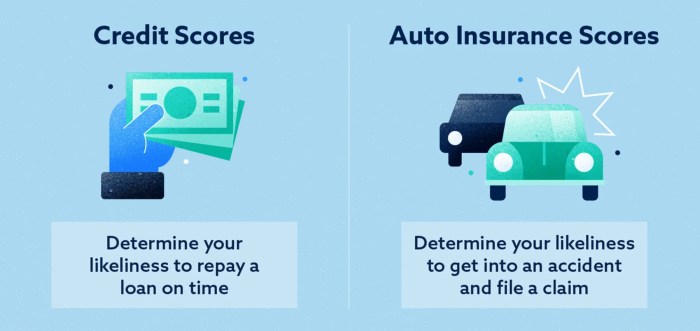
Credit score plays a crucial role in determining insurance risk for individuals seeking auto insurance coverage. Insurance companies use credit scores as a risk assessment tool due to the strong correlation between creditworthiness and the likelihood of filing claims.
Link Between Credit Score and Insurance Risk
Insurance companies have found a direct relationship between credit scores and insurance risk. Individuals with higher credit scores are considered more financially responsible and are perceived as lower risk by insurance providers
Reasons for Using Credit Score in Risk Assessment
The use of credit scores by insurance companies is based on statistical data showing a clear connection between credit history and the probability of filing insurance claims. By analyzing credit scores, insurers can predict the likelihood of policyholders making claims and adjust premiums accordingly.
This helps insurance companies manage risks and maintain profitability in the long run.
Correlation with Likelihood of Filing Claims
Research has shown that individuals with lower credit scores are more likely to file insurance claims compared to those with higher credit scores. This correlation is a key factor in determining insurance premiums, as policyholders with poor credit histories are perceived as higher risk and may face higher insurance rates.
Therefore, maintaining a good credit score can potentially lead to lower auto insurance premiums.
Tips for Improving Credit Score to Lower Insurance Costs
Improving your credit score can have a significant impact on lowering your auto insurance costs. Insurance companies often use credit scores to assess the risk associated with insuring an individual. By taking steps to improve your credit score, you can potentially qualify for lower insurance premiums.One of the most effective strategies for improving your credit score is to make timely payments on all your bills.
Late or missed payments can have a negative impact on your credit score, so staying current on your financial obligations is crucial. Additionally, reducing your overall debt and keeping credit card balances low can also help improve your credit score.
Pay Off Outstanding Debt
Paying off outstanding debt can significantly improve your credit score. High levels of debt can negatively impact your credit utilization ratio, which is a key factor in determining your credit score. By reducing your debt load, you can lower your credit utilization ratio and improve your credit score over time.
Monitor Your Credit Report
Regularly monitoring your credit report can help you identify any errors or inaccuracies that may be negatively impacting your credit score. By addressing these issues promptly, you can ensure that your credit score is an accurate reflection of your credit history.
Avoid Opening Multiple Lines of Credit
Opening multiple lines of credit within a short period of time can have a negative impact on your credit score. Each new credit application results in a hard inquiry on your credit report, which can lower your score. To improve your credit score, avoid opening unnecessary lines of credit.Improving your credit score not only has the immediate benefit of potentially lowering your auto insurance premiums, but it can also have long-term benefits.
A higher credit score can lead to lower interest rates on loans, better credit card offers, and overall financial stability. By taking steps to improve your credit score, you can save money on auto insurance and other financial products in the future.
Epilogue
In conclusion, understanding how credit scores influence auto insurance quotes is essential for making informed decisions about managing insurance costs. By implementing strategies to enhance credit scores, individuals can potentially see a positive impact on their insurance rates over time.
Commonly Asked Questions
How does a low credit score affect auto insurance premiums?
A low credit score can result in higher insurance premiums as it is often correlated with a higher risk profile, leading insurance companies to charge more to offset potential losses.
What factors, besides credit score, influence insurance premiums?
Other factors such as driving record, age, and type of vehicle can also impact insurance premiums, with insurance companies considering a variety of variables when setting rates.
Why do insurance companies use credit scores as a risk assessment tool?
Insurance companies use credit scores as they have been shown to be indicative of an individual's likelihood to file claims, helping insurers assess the level of risk associated with a policyholder.


![20 Best Online Computer Information Systems Degrees [2025 CIS Degree Guide]](https://technology.fin.co.id/wp-content/uploads/2025/10/colleges-best_1910-120x86.png)

![Is Computer Information Systems a Good Major? [2025 Guide]](https://technology.fin.co.id/wp-content/uploads/2025/10/computer-information-systems-careers-2-120x86.jpg)