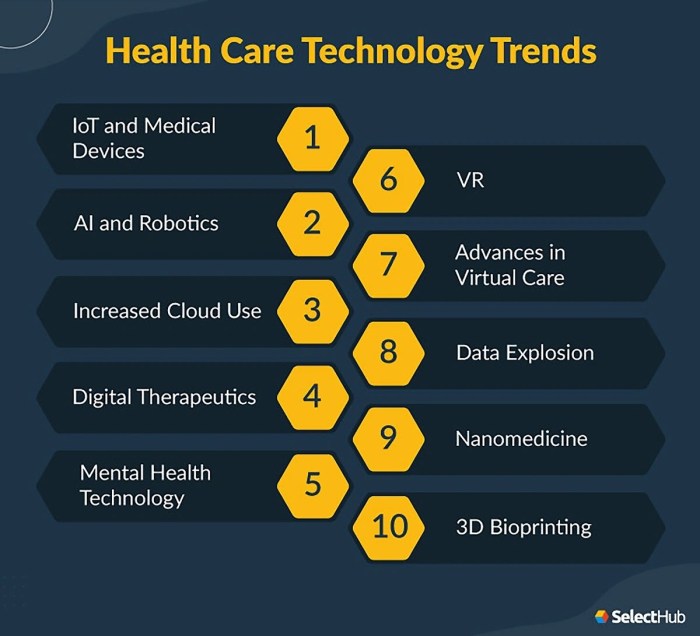
Top 5 Emerging Trends in Health Information Technology for 2025 sets the stage for this enthralling narrative, offering readers a glimpse into a story that is rich in detail and brimming with originality from the outset.
As we delve into the top 5 emerging trends in health information technology for 2025, a world of innovation and transformation unfolds before us, shaping the future of healthcare in unprecedented ways.
Overview of Health Information Technology Trends
In the rapidly evolving landscape of healthcare, staying updated with the latest advancements in Health Information Technology (Health IT) is crucial. Here, we delve into the top 5 emerging trends in health information technology for 2025 and explore how these trends are shaping the future of healthcare.
Interoperability and Data Exchange
Interoperability and seamless data exchange are becoming paramount in healthcare systems. The ability to securely share patient information across various platforms and systems is essential for providing comprehensive care and improving patient outcomes.
Artificial Intelligence and Machine Learning
Artificial Intelligence (AI) and Machine Learning (ML) are revolutionizing healthcare by enabling predictive analytics, personalized treatment plans, and early disease detection. These technologies have the potential to enhance diagnostic accuracy and streamline administrative processes.
Telehealth and Remote Monitoring
Telehealth services and remote monitoring tools are gaining popularity, especially in light of the COVID-19 pandemic. These technologies enable healthcare providers to deliver care to patients remotely, increasing access to healthcare services and reducing the burden on traditional healthcare facilities.
Blockchain Technology for Security
Blockchain technology is being increasingly adopted in healthcare for its ability to ensure data security and integrity. By providing a secure and transparent way to store and share sensitive health information, blockchain technology is helping to protect patient privacy and prevent data breaches.
IoT and Wearable Devices
The Internet of Things (IoT) and wearable devices are transforming healthcare by enabling continuous monitoring of patient health metrics. These devices allow for real-time data collection, remote patient monitoring, and early intervention, ultimately improving patient outcomes and reducing healthcare costs.
Artificial Intelligence in Health Information Technology
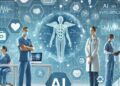
Artificial intelligence (AI) is transforming the landscape of health information technology, revolutionizing the way healthcare data is managed and utilized. By leveraging AI capabilities, healthcare providers can streamline processes, improve decision-making, and enhance patient care.
AI Applications in Healthcare Data Management
AI is being utilized in various aspects of healthcare data management, such as:
- Medical Imaging Analysis: AI algorithms can analyze medical images like X-rays, MRIs, and CT scans to aid in diagnosing conditions accurately and quickly.
- Predictive Analytics: AI can predict patient outcomes, identify high-risk individuals, and optimize treatment plans based on historical data and patterns.
- Natural Language Processing: AI-powered tools can extract valuable insights from unstructured clinical notes and patient records, improving data interpretation and analysis.
- Virtual Health Assistants: AI-driven chatbots and virtual assistants can provide personalized guidance, answer patient queries, and schedule appointments efficiently.
Benefits of Implementing AI in Health Information Systems
Implementing AI in health information systems offers a wide range of benefits, including:
- Enhanced Decision-Making: AI algorithms can analyze vast amounts of data quickly, helping healthcare providers make informed decisions and improve patient outcomes.
- Increased Efficiency: AI automation can streamline administrative tasks, optimize workflows, and reduce manual errors, allowing healthcare professionals to focus on patient care.
- Personalized Medicine: AI can analyze patient data to tailor treatment plans, medications, and interventions according to individual needs, leading to more effective and personalized care.
- Improved Patient Engagement: AI-powered tools can enhance patient engagement through personalized health recommendations, remote monitoring, and proactive healthcare management.
Telemedicine and Remote Patient Monitoring
Telemedicine and remote patient monitoring play a crucial role in modern healthcare by leveraging technology to provide medical services remotely. This includes virtual consultations, monitoring of vital signs, and managing chronic conditions from a distance.
Comparison of Traditional Healthcare Practices with Telemedicine Benefits
- Traditional Healthcare Practices:
- Require in-person visits to healthcare facilities.
- Limited access to specialists in remote or rural areas.
- Long waiting times for appointments.
- Telemedicine Benefits:
- Enable patients to consult with healthcare providers from the comfort of their homes.
- Expand access to specialists through virtual consultations.
- Reduce waiting times and travel costs for patients.
Impact of Telemedicine on Patient Care and Accessibility
Telemedicine has significantly improved patient care and accessibility by:
- Increasing access to healthcare services for individuals in remote or underserved areas.
- Enhancing follow-up care for patients with chronic conditions through remote monitoring.
- Reducing unnecessary emergency room visits by providing timely virtual consultations.
Blockchain Technology in Healthcare
Blockchain technology is revolutionizing the healthcare industry by offering a secure and decentralized way to store, manage, and share patient data. By utilizing a distributed ledger system, blockchain ensures that health information remains tamper-proof and transparent, enhancing data security and privacy.
Integration of Blockchain in Health Information Systems
Blockchain is being integrated into health information systems to create a unified platform for storing and sharing patient records securely. Each block in the chain contains encrypted data that is linked to the previous block, forming a secure and immutable record of all transactions.
This technology enables healthcare providers to access real-time and accurate patient information, leading to improved care coordination and decision-making.
Potential Benefits of Blockchain in Securing Patient Data
The use of blockchain in healthcare offers numerous benefits, including enhanced data security, interoperability, and transparency. Patient data stored on the blockchain is encrypted and can only be accessed by authorized users, reducing the risk of data breaches and unauthorized access.
Additionally, blockchain promotes interoperability by allowing different healthcare entities to securely share information, streamlining processes and improving patient outcomes.
Challenges and Opportunities of Implementing Blockchain in Healthcare
While blockchain technology holds great promise for the healthcare industry, there are challenges to its widespread adoption. One of the main obstacles is the complexity of integrating blockchain into existing health information systems and ensuring compliance with regulatory requirements. Moreover, the scalability and interoperability of blockchain solutions need to be addressed to realize its full potential in healthcare.
Despite these challenges, the opportunities presented by blockchain, such as improved data security, transparency, and efficiency, make it a compelling technology for the future of healthcare.
Wearable Technology and Health Tracking Devices
Wearable technology has become increasingly popular in recent years as people strive to take control of their health and well-being. These devices offer a convenient way to monitor various health parameters and track daily activities, providing valuable insights into one's overall health status.
Features and Functionalities of Health Tracking Devices
- Heart Rate Monitoring: Wearable devices can track heart rate continuously, providing real-time data on heart health and activity levels.
- Activity Tracking: These devices can monitor steps taken, distance traveled, calories burned, and even track specific exercises for a comprehensive overview of physical activity.
- Sleep Tracking: Many health tracking devices offer sleep tracking features to analyze sleep patterns and provide insights for improving sleep quality.
- Stress Management: Some wearables include features for stress monitoring, offering guided breathing exercises and relaxation techniques to manage stress levels.
- Health Metrics: From blood oxygen levels to skin temperature, some devices can measure various health metrics to provide a holistic view of one's well-being.
Implications of Wearable Technology on Preventive Healthcare Measures
- Early Detection: Wearable devices can help in the early detection of health issues by continuously monitoring vital signs and alerting users to any abnormalities.
- Personalized Health Insights: By collecting and analyzing data on a daily basis, these devices can provide personalized health recommendations and insights based on individual trends and patterns.
- Promoting Healthy Habits: Health tracking devices can motivate users to adopt healthier lifestyle choices by setting goals, sending reminders, and providing feedback on progress.
- Remote Monitoring: Healthcare providers can remotely monitor patients' health data in real-time, allowing for proactive interventions and personalized care plans.
- Empowerment and Engagement: Wearable technology empowers individuals to take charge of their health, encouraging active participation in preventive healthcare measures and overall well-being.
Ending Remarks
In conclusion, the landscape of health information technology is evolving rapidly, driven by these top 5 emerging trends that promise to revolutionize the way we approach healthcare. As we move towards 2025, embracing these advancements will be crucial in ensuring a more efficient, accessible, and patient-centric healthcare system.
Detailed FAQs
How can healthcare professionals stay updated with technological advancements in the sector?
Healthcare professionals can stay updated by attending conferences, workshops, webinars, and continuously engaging in professional development opportunities. They can also follow reputable sources in the field and network with experts to stay abreast of the latest trends.
What are the main challenges of implementing blockchain technology in healthcare systems?
Some challenges of implementing blockchain in healthcare include regulatory issues, interoperability with existing systems, data privacy concerns, and the need for standardization across platforms. Overcoming these challenges will be crucial for successful integration.
How do wearable devices impact preventive healthcare measures?
Wearable devices play a significant role in preventive healthcare by enabling individuals to track their health metrics in real-time, leading to early detection of health issues and promoting proactive lifestyle changes. This data-driven approach empowers individuals to take control of their health and well-being.


![20 Best Online Computer Information Systems Degrees [2025 CIS Degree Guide]](https://technology.fin.co.id/wp-content/uploads/2025/10/colleges-best_1910-120x86.png)
![Is Computer Information Systems a Good Major? [2025 Guide]](https://technology.fin.co.id/wp-content/uploads/2025/10/computer-information-systems-careers-2-120x86.jpg)